Utah, Omaha, Pointe du Hoc, Arromanches: follow in the footsteps of those who changed history
At dawn on June 6, 1944, thousands of Allied soldiers landed on the beaches of Normandy. This operation—the largest amphibious assault in history—paved the way for the liberation of Western Europe. More than eighty years later, these sites are visited in an atmosphere of quiet reflection; spending a day with a guide offers a deeper understanding of the events that took place here—far beyond what one might read in books.
The D-Day landing coast stretches for about sixty kilometers and encompasses five distinct beaches, each with its own unique history. Utah and Omaha made up the American sector, Gold and Sword the British sector, and Juno the Canadian sector. Each beach was defined by different combat experiences, unique geography, and distinct outcomes—a diversity that makes visiting these locations such a rich experience.
Recommended stops
Utah Beach and Sainte-Mère-Église. Located at the westernmost end of the landing zone, Utah Beach is home to a museum that chronicles the operation through a collection of artifacts and personal accounts. A few kilometers away lies Sainte-Mère-Église, one of the first villages to be liberated during the night of June 5–6, following the arrival of American paratroopers. The village is world-renowned for its church and the story of a paratrooper who became snagged on the church steeple.
La Pointe du Hoc. This rocky promontory rises high above the ocean. Here, American soldiers—the Rangers—scaled the cliffs under enemy fire to neutralize an artillery battery. Today, the craters left by bombardments and the remains of concrete bunkers are still visible, making for a striking landscape. The wind can be strong, so be sure to bring a jacket—even in the summer.
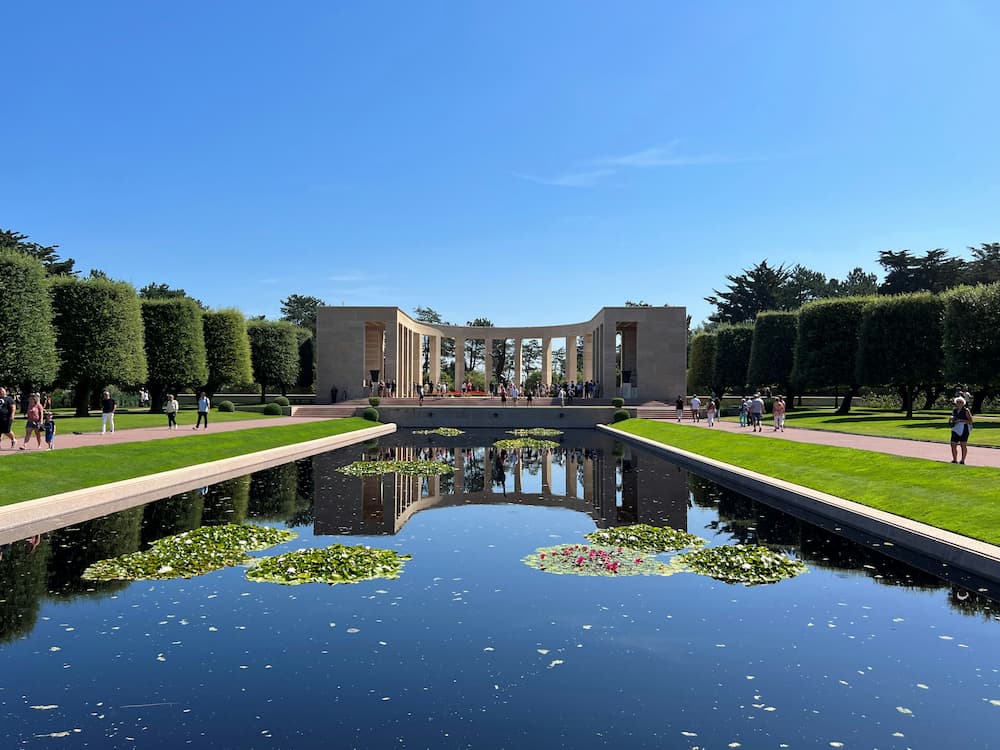
Omaha Beach and the American Cemetery in Colleville-sur-Mer. Omaha was the site of the deadliest fighting on D-Day. Just above the beach, the American Cemetery holds thousands of white crosses, all aligned and facing the sea. It is a place of great dignity, where visitors naturally fall into silence. Many of our travelers tell us that this is the stop that left the deepest impression on them.
Arromanches and its artificial harbor. To resupply their troops, the Allies constructed two artificial harbors—known as “Mulberry harbors”—using components prefabricated in England. At Arromanches, remnants of this harbor can still be seen in the sea. The small town, with its D-Day museum, narrow streets, and shops, is an ideal spot for a late-morning break or lunch.
Why a guide makes all the difference
At any given location, a site without context is often nothing more than a beautiful view. With a guide, it becomes a story. Our guides recount events hour by hour—the decisions made, the twists of fate, and the personal stories of those who were there. They help you connect each site to the battle: why this specific beach rather than another, why this particular cliff, or why this village. They answer your questions, tailor their narrative to your level of prior knowledge, and know exactly when to step back to allow you a moment for quiet reflection.
On a private tour with us, you set your own pace. There are no groups to follow and no bus schedules to keep; you are free to take your time—to pause, ask questions, or read the names inscribed on the memorials. Your driver will drop you off and pick you up as close to the sites as possible, conserving your energy for what matters most, and they know the best times to visit to help you avoid the crowds.
Planning your day
A full-day tour typically lasts between 6 and 9 hours. To ensure you can enjoy each stop without feeling rushed, we recommend selecting four or five sites—no more—and allowing ample time for a proper lunch break. We offer departures from Paris, Le Havre, Cherbourg, Honfleur, Deauville, Rouen, or directly from your cruise ship; we will pick you up wherever is most convenient for you and return you to your preferred location and time, including back to your cruise ship.
A few practical tips: please wear comfortable footwear, as you will be walking on sand, grass, and occasionally uneven paths. It is also a good idea to bring a windbreaker, as the weather along the coast can change quickly. Lunch, gratuities, and entrance fees (where applicable) are not included, though we would be happy to recommend some excellent spots along the way. If anyone in your group uses a wheelchair, please let us know in advance; we have accessible vehicles available and can select sites and routes that are the most accommodating.
A tour that can become personal
If you have an ancestor or a loved one with a connection to the D-Day landings, please let us know before the tour. Whether it was a grandfather who served as a soldier, an uncle who was a paratrooper, or a specific name you would like to find at a cemetery, we can tailor the itinerary to include places that are meaningful to you, making the day a truly personal experience. This is one of the great advantages of a private tour: the program is built around your own family history.
Would you like to visit the D-Day landing beaches? Choose your tour on our website, or get in touch via email, phone, or WhatsApp—we will help you put together a day that’s just right for you.